
In today’s hyper-digital world, attention spans are shrinking and competition for eyeballs is fiercer than ever. Brands, influencers, and creators are all fighting for those precious seconds on someone’s screen. And what separates a Reel that quietly disappears from one that explodes to millions of views? More often than not, the answer isn’t the camera, the location, or even the talent — it’s the editing.
Short-form content editing is a craft. And like any craft, it can be learned, practiced, and mastered.
Why Editing is the Real MVP of Viral Reels
You could shoot the most breathtaking footage in the world, but without sharp, intentional editing, viewers will scroll past it in seconds. Editing is what controls the energy of your video. It dictates the pace, the emotion, and the storytelling. A well-edited 15-second Reel can communicate more than a poorly edited 3-minute video ever could.
Think about the Reels you’ve stopped to watch — the ones you replayed or shared. Chances are, the cuts were tight, the transitions felt natural (or deliberately punchy), the music matched the mood perfectly, and the hook grabbed you within the first second. None of that happens by accident. That’s the result of deliberate, skilled editing.
The First Second is Everything
On Instagram Reels, TikTok, and YouTube Shorts, the algorithm rewards watch time. If viewers swipe away in the first second, your video is essentially dead. This is why the opening frame of your Reel is the most important edit you’ll ever make.
Great editors understand this instinctively. They lead with the most compelling frame — a surprising visual, a bold statement, an unexpected moment — before anything else. The “slow burn” intro works for long-form YouTube documentaries. For short-form content, you need to detonate your best idea immediately.
Some techniques that work brilliantly for the opening hook include:
- Mid-action entry: Start the video right in the middle of something happening, not at the beginning of a scene setup.
- Text overlays: Bold, curiosity-triggering captions in the first frame that make the viewer think “wait, I need to know where this goes.”
- Pattern interrupts: An unusual color, an unexpected sound, or a quick cut that breaks the visual monotony of the feed.
Pacing: The Heartbeat of Your Reel
Pacing is perhaps the most underrated element of short-form editing. Too slow, and viewers scroll. Too chaotic, and viewers feel overwhelmed and leave. The sweet spot lies in matching your cut rhythm to the energy you want to evoke.
Fast cuts (every 1–2 seconds) work well for high-energy content — sports highlights, fashion transitions, travel montages, and motivational content. They create a sense of momentum and excitement.
Slower pacing works for emotional content, cooking demonstrations, or aesthetic lifestyle content where the viewer is meant to feel calm and inspired rather than energized.
The real skill lies in variation. The most viral Reels often use a slow-fast-slow rhythm or build progressively, creating a sense of narrative arc even in 30 seconds. This is something that separates amateur editors from professionals — understanding that pacing isn’t uniform; it breathes.
Sound Design: The Invisible Editor
Here’s a truth that most beginners overlook: in short-form content, sound does half the editing for you. The right audio track can mask awkward cuts, elevate mediocre footage, and emotionally transport viewers in ways visuals alone cannot.
Syncing your cuts to the beat of the music is the most foundational short-form editing technique. When a cut lands on a beat drop or a musical accent, it feels satisfying to the viewer on a neurological level — even if they can’t explain why.
Beyond music, consider:
- Sound effects: A subtle whoosh on a transition, a click sound on a text appearance — these micro audio cues make editing feel polished and professional.
- Voiceover pacing: If your Reel uses voiceover narration, the rhythm of speech should dictate the visual cuts. Edit the audio first, then cut visuals to match.
- Silence as a tool: A sudden cut to silence can be one of the most powerful dramatic devices in short-form content. Don’t underestimate the impact of removing sound for a moment.
Transitions: Use Them Wisely
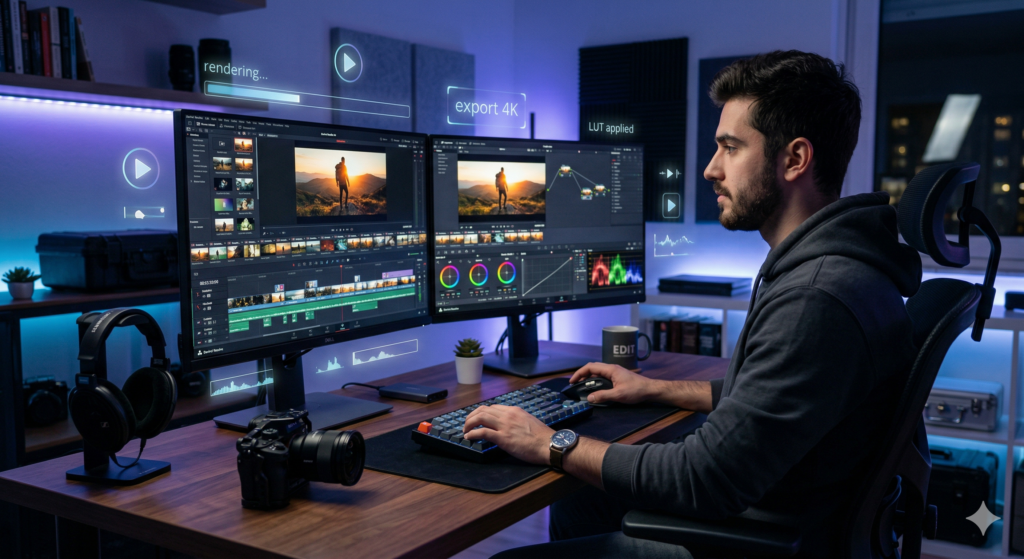
Transitions are the flashiest element of short-form editing, and they’re also the most misused. Beginners tend to overload their videos with complex transitions because they look impressive in isolation. But experienced editors know that transitions should serve the story, not steal attention from it.
The most effective short-form transitions are often the simplest: a hard cut timed to a beat, a natural motion blur created by swinging the camera, or a color-match cut between two visually similar frames. These transitions feel seamless because they’re invisible — they move the viewer forward without making them aware an edit happened.
Save the complex transitions — the glitch effects, the split-screen morphs, the 3D spins — for moments where you intentionally want to call attention to the edit itself as a stylistic statement. And even then, use them sparingly.
Colour Grading: The Mood Maker
Colour grading is what gives your Reels a consistent visual identity and emotional texture. A warm, golden grade evokes nostalgia and warmth. Cool, desaturated tones suggest sophistication or melancholy. Punchy, high-contrast grades feel energetic and bold.
Many viral creators have a signature “look” that makes their content instantly recognizable, even without seeing their name. That look is almost entirely built through consistent colour grading. It’s branding through aesthetics — and audiences respond to it subconsciously.
Even basic colour correction — ensuring proper exposure, balanced whites, and consistent skin tones across clips — makes an enormous difference in perceived production quality. Footage that looks “off” in colour makes viewers subtly uncomfortable, even if they can’t pinpoint why.
Captions and Text: A Non-Negotiable in 2025
Studies consistently show that a majority of short-form content is consumed on mute. This means your captions aren’t a nice-to-have — they’re essential.
But beyond accessibility, smart text overlays serve an editorial function. They can reinforce your message, add humour through timing, create suspense, or guide viewer attention to specific parts of the frame. The timing of when text appears and disappears is itself an editing choice that impacts engagement.
Auto-captions have improved dramatically with AI tools, but the best editors still manually adjust caption timing, choose fonts that match their brand personality, and strategically position text in the frame to avoid visual clutter.
Learning to Edit Like a Professional
Reading about these techniques is one thing. Developing the muscle memory and instinct to execute them fluidly while editing is another. That gap is bridged through practice — and through proper training.
If you’re serious about building a career in content creation, social media management, or digital marketing, structured video editing courses can dramatically accelerate your learning curve. Rather than spending years piecing together YouTube tutorials, a good course gives you a clear curriculum, hands-on projects, mentor feedback, and an understanding of the professional tools used in the industry.
For creators and aspiring professionals in Rajasthan, there’s growing access to high-quality video editing training in Jodhpur — bringing world-class digital skills education to the heart of the desert city. Jodhpur has seen a surge in digital-first entrepreneurs, content creators, and marketing professionals, and the demand for skilled video editors has followed.
Whether you’re looking to freelance for brands, launch your own content channel, or add a high-demand skill to your professional portfolio, enrolling in a video editing course in Jodhpur puts you in a community of learners, gives you access to professional software training, and teaches you industry workflows that real agencies and production houses actually use.
The best today cover far more than just the software. They teach you storytelling principles, colour theory, audio engineering basics, platform-specific optimization (what works on Instagram isn’t identical to what works on YouTube Shorts), and how to work efficiently under deadline pressure. That holistic education is what prepares you for real-world work.
 The Mindset Shift That Changes Everything
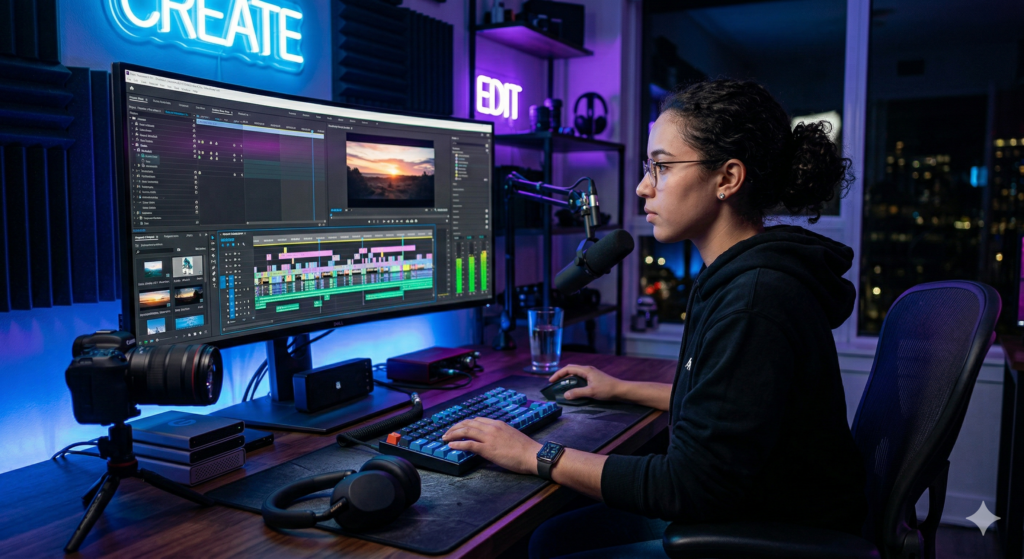
Here’s the deepest truth about short-form editing: it’s not about special effects, expensive plugins, or even the most powerful editing software. It’s about decision-making.
Every cut is a decision. Every transition is a decision. Every moment you choose to hold on a frame or flash through it is a decision. The editors whose work regularly goes viral are simply people who’ve internalized thousands of these micro-decisions so deeply that they make them intuitively and correctly.
That intuition is built by watching great short-form content analytically — not just as entertainment, but asking why does this work? Why does this cut feel good? Why does this section lose me? By studying the craft deliberately, you train your eye.
And then you edit. And edit. And edit again.
Final Cut
Short-form video is the dominant content format of our era, and it isn’t going anywhere. If anything, the competition is going to get fiercer as more creators and brands enter the space armed with better cameras and more resources.
The editors who rise to the top won’t necessarily be the ones with the most expensive gear. They’ll be the ones who understand storytelling through editing — who know how to hook a viewer in the first second, hold them through clever pacing, move them emotionally with sound, and leave them wanting to share what they just watched.
That skill is entirely learnable. It starts with curiosity, grows through practice, and accelerates dramatically through quality video editing training in Jodhpur or wherever you are in the world. The tools are accessible. The knowledge is available. The only question is: how serious are you about mastering the craft?
The next viral Reel might be one edit away.